

Class-Based Search and Team Shuffle are now available in Hydra Matchmaking, addressing two different multiplayer problems: finding a session where a player can use their preferred class and reshuffling teams between rounds or matches.
In games with class-based gameplay, players may enter a session only to discover that their preferred class is already taken. During repeated rounds, teams can also become uneven as differences in scores and ratings emerge. The new features address these situations at different stages of the session.
Class-Based Search: find a session for the selected class
Class-Based Search allows players to select their preferred class before entering the matchmaking queue. Hydra Matchmaking uses that selection as an additional search condition when looking for a suitable session.
This helps prevent a player from joining a session only to find that the class they wanted to play is unavailable.
Support the class model used by each game

Not every multiplayer game uses classes. For games that do, project teams configure corresponding class data in the Developers Portal so that Hydra Matchmaking can interpret the selection received from the game client.
The configuration reflects the classes used by the title. Hydra does not impose a universal set of roles such as Tank, Healer, Damage, or Support.
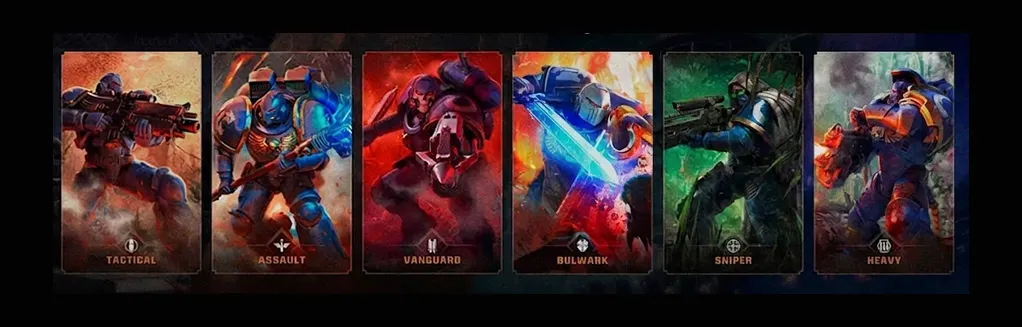
Choose a class before joining the Space Marine 2 queue
In Warhammer 40,000: Space Marine 2, players select their preferred class in the game menu before joining the matchmaking queue. The selected class is then considered when Matchmaking searches for a session.
This reduces the likelihood of players entering a session where their preferred class is already unavailable.
Team Shuffle: rebalance teams between rounds and matches
Even when the initial teams meet the game’s matchmaking criteria, a session may become one-sided. Differences can emerge because of team ratings, party composition, or the way players were distributed at the start.
Team Shuffle allows a game to reshuffle teams between rounds or matches. The system uses the current team scores to calculate a win ratio and considers the teams’ ratings when determining how strongly to reshuffle them.
Adapt shuffle strength to the match state
The amount of reshuffling depends on the score difference, team ratings, and a parameter configured for the title.
When the teams remain close, the system can make a lighter adjustment. A larger difference can trigger a stronger shuffle. This allows each project to control how actively the system responds to an imbalance during a session.
Keep parties together
Team Shuffle preserves existing party groups instead of separating their members across opposing teams.
For balancing purposes, the system uses the average rating of the players in a party. This allows the party to be evaluated as a group while keeping its members together during the shuffle.
Address two problems at different stages
Class-Based Search and Team Shuffle operate at different points in the multiplayer flow.
Class-Based Search uses the player’s class preference while looking for a session. Team Shuffle uses score and rating differences to reshuffle teams after play has begun. Together, they help projects improve class availability and manage imbalances between rounds or matches.
To discuss how these features could fit your game’s matchmaking rules and existing architecture, contact the Hydra Game Services team.
