


How Clive Barker’s Hellraiser: Revival Uses Hydra Game Services
Key takeways

How Clive Barker’s Hellraiser: Revival Uses Hydra Game Services
Overview
Single-player games need services that support both the player experience and the team behind it. Hydra brings these needs together: LiveOps tools help teams communicate with players and deliver rewards, while playtest management and crash reporting support development and release preparation.
For Clive Barker’s Hellraiser: Revival, the team integrated Hydra’s Unreal Engine plugin to connect the game with selected services. In-game banners, account linking, and a dedicated page on saber.games support player engagement, while playtest tools and crash reporting support the team’s workflows.
The project illustrates how a single-player title can choose the capabilities it needs and build on a shared services platform.
In-Game Banners and Player Communication
An in-game message gives developers and publishers a way to reach players while they are already engaged with the title. It can make an important announcement visible to someone who does not follow the game’s social channels or regularly visit its website.
Hydra’s Banner system supports promotional and informational messages inside the game. These can highlight patch notes, announce updates, promote new content or DLC, provide gameplay tips, or direct players to relevant in-game content and external pages.
For example, an announcement can summarize an update and link to the full patch notes. A promotional banner can direct players to a DLC page on their platform’s store, while an informational banner can explain a game feature.
Banners Carousel in the Game Client
Game developers define how this feature appears and behaves in the client. Clive Barker’s Hellraiser: Revival uses a typical implementation of Banner system: a small widget displaying a carousel of banners, with links where relevant.

The widget can be configured to rotate banners automatically, let players open linked content, and allow them to collapse the panel when they want to hide the messages. The title team determines how these interactions fit into the game’s interface and player experience.
Campaigns and Targeting
Title owners can create banners, organize them into campaigns, and schedule those campaigns for specific groups of players. Targeting can consider a player’s platform, location, localization settings, purchased DLCs, and other configured parameters.
This allows the same communication channel to serve different audiences. A DLC promotion can direct players to the appropriate platform store, while purchase information can help determine whether that promotion is relevant to them. Localization settings can be used to select content appropriate to the player.
Once campaigns are configured, the Banner system filters them against the player’s parameters and applies predefined priorities to select the content for display. These rules determine which messages take precedence when several campaigns are eligible for the same player.
Banner and Campaign Updates
Banner system allows messages to be managed separately from the core game experience. Supported banner and campaign updates can be delivered without preparing and distributing a new game build.
This separation gives communication its own publishing schedule. Teams can prepare campaigns, update announcements, and share information about an issue independently of the next client release.
Hydra provides campaign configuration, targeting, scheduling, and content selection, while the game team implements the presentation and interaction in the client. Together, these layers give development and marketing teams a configurable channel for communicating with players.
Account Linking and In-Game Rewards
For studios developing single-player games, the relationship with players can extend beyond the game itself.
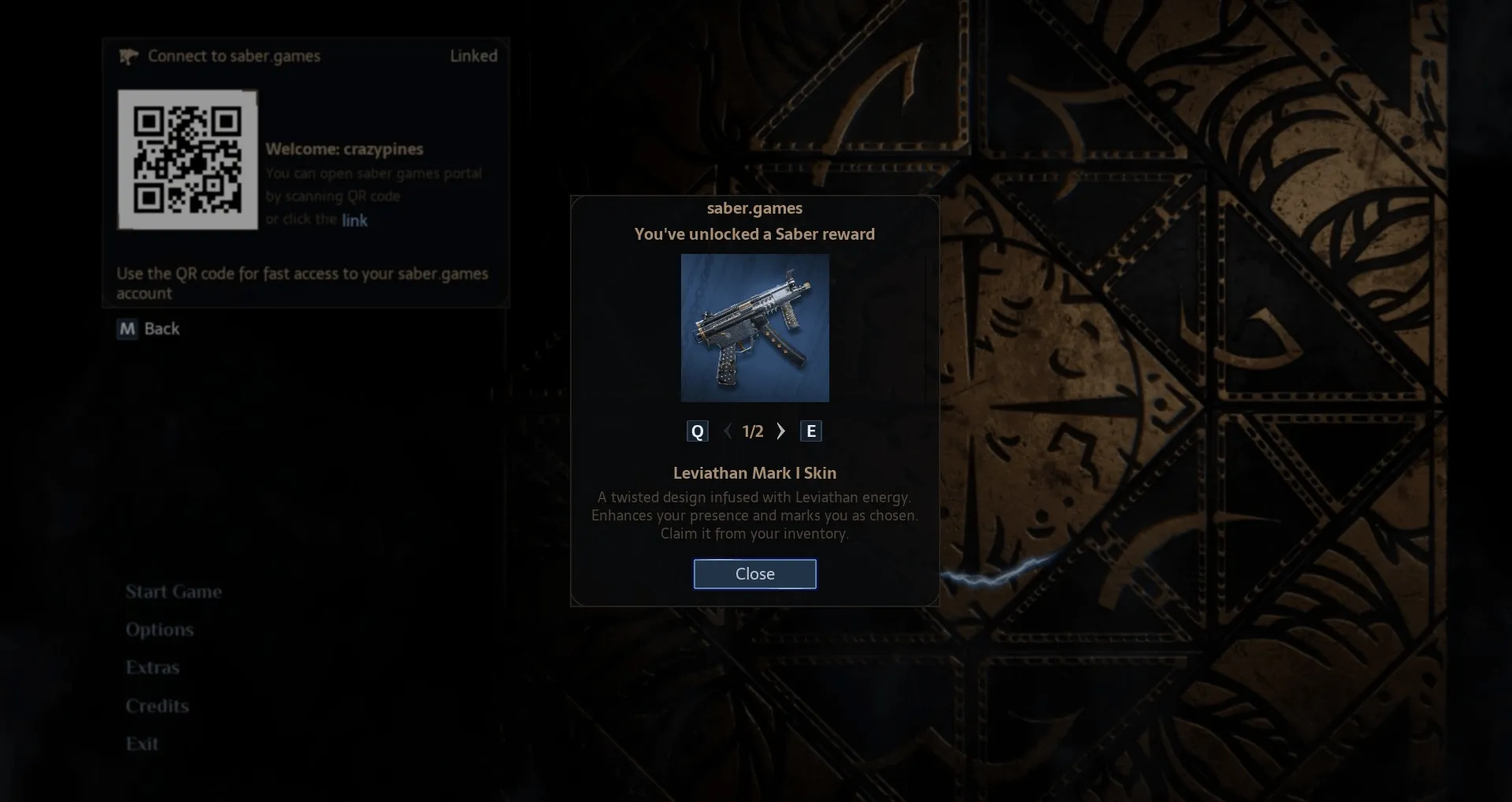
In Clive Barker’s Hellraiser: Revival, players can link their game to a saber.games account by scanning a QR code displayed in-game. Hydra’s QR Codes feature makes it easy to access the Player Portal from the game, register or sign in, and complete the link.
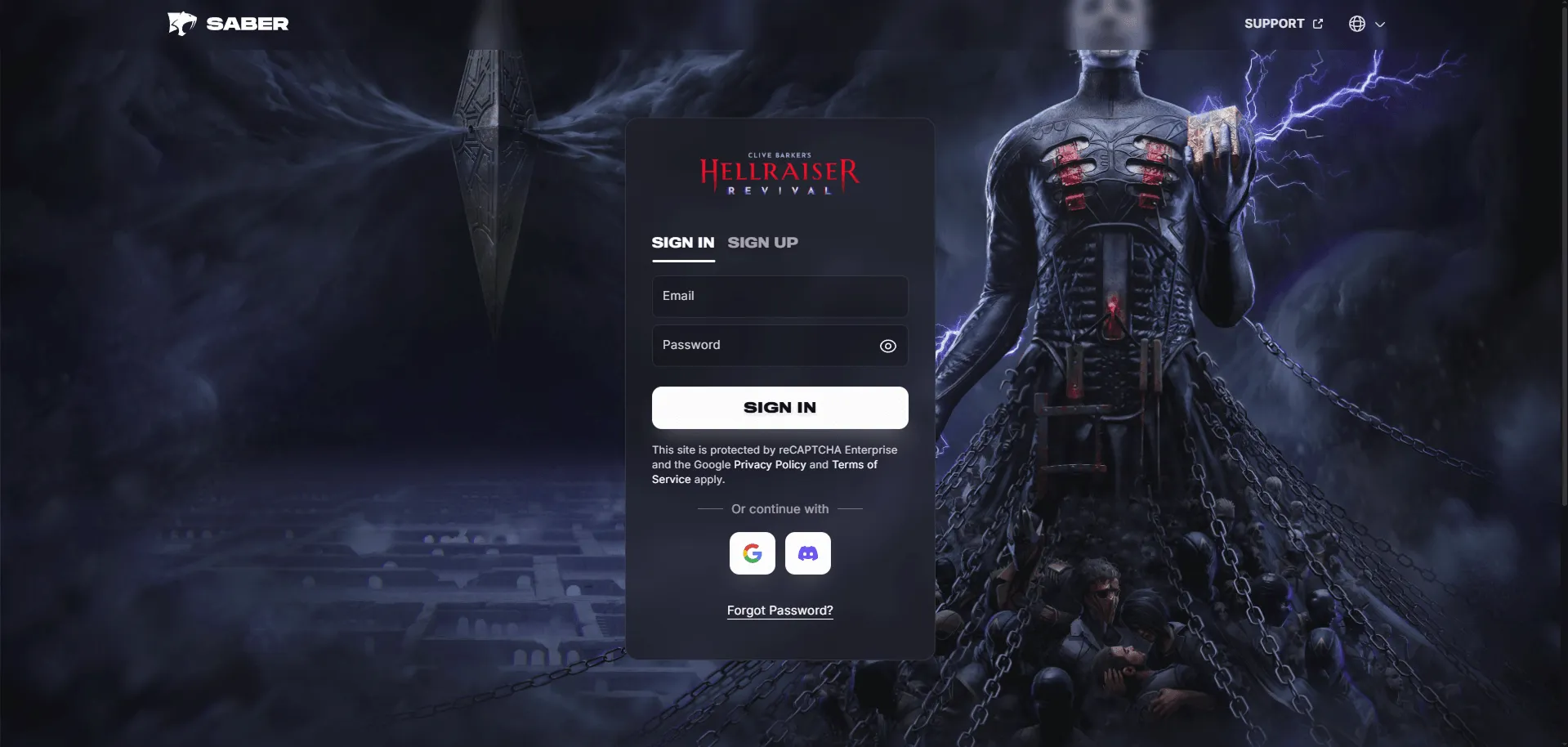
That connection also gives players a way to return to saber.games, explore its shared catalog of Saber titles, and access activities around individual games. Depending on what a title supports, players can receive rewards, view game statistics, or discover personalized offers.
Players who link the game receive exclusive in-game rewards for Hellraiser: Revival. Beyond account linking, Hydra also supports rewards for other player actions, giving studios more ways to encourage engagement. It helps teams deliver these experiences without building a separate system for each flow.
Game Page on SABER.GAMES

The connection between a game and its players also continues through its ↗ dedicated page on saber.games. For Clive Barker’s Hellraiser: Revival, the page brings together information about the game, promotional content, and rewards, giving players a place to explore what the title offers.
Featured banners provide a visible space for key messages and campaigns. On the Clive Barker’s Hellraiser: Revival page, a banner highlights the playable demo and directs visitors to Steam. This gives promotional content a clear next step, connecting an announcement with something the player can explore.
Alongside the banners, players can browse the game’s description and media, find its official website and social channels, and follow links to available editions. Bringing these elements together helps visitors move from discovering the game to learning more about it.
The rewards section displays all rewards available for the title, including those the player has already received and those they can still earn. Players can explore the exclusive rewards for Hellraiser: Revival and see the requirements for obtaining them, such as linking the game to a saber.games account.
For studios, the page provides a place within the wider saber.games ecosystem to present a title, highlight relevant content, and introduce supported player activities. It complements in-game messages and account linking, giving players a destination they can return to outside the game.
Playtesting Before Release
Playtests help studios understand how players experience a game, gather feedback, and identify gameplay, usability, and technical issues before release. For Clive Barker’s Hellraiser: Revival, the team conducted an internal Friends & Family playtest focused on PC compatibility and performance across a range of home configurations.

Organizing a playtest also requires coordination: participants need access to the game, keys must reach the right people, and communication needs to follow the test’s schedule.
Hydra’s playtest-management workflow and the Player Portal supported participant access and key delivery. These tools are designed to reduce the need for organizers to distribute keys manually and send separate reminders at each stage, bringing more of the coordination into a shared process. Automation can be combined with manual coordination where the test requires it.
For studios, this extends the role of a shared services platform into release preparation. Alongside player-facing features and development tools, Hydra can support the practical work of organizing tests and managing access while the game team focuses on what it needs to evaluate.
Crash Reporting
Hydra’s crash reporting tools are also part of the team’s development and support workflow.
Collected crash data on Developers Portal gives developers a shared place to review failures and investigate recurring problems. Available build and session information can help the team identify patterns and prioritize issues that need further attention.
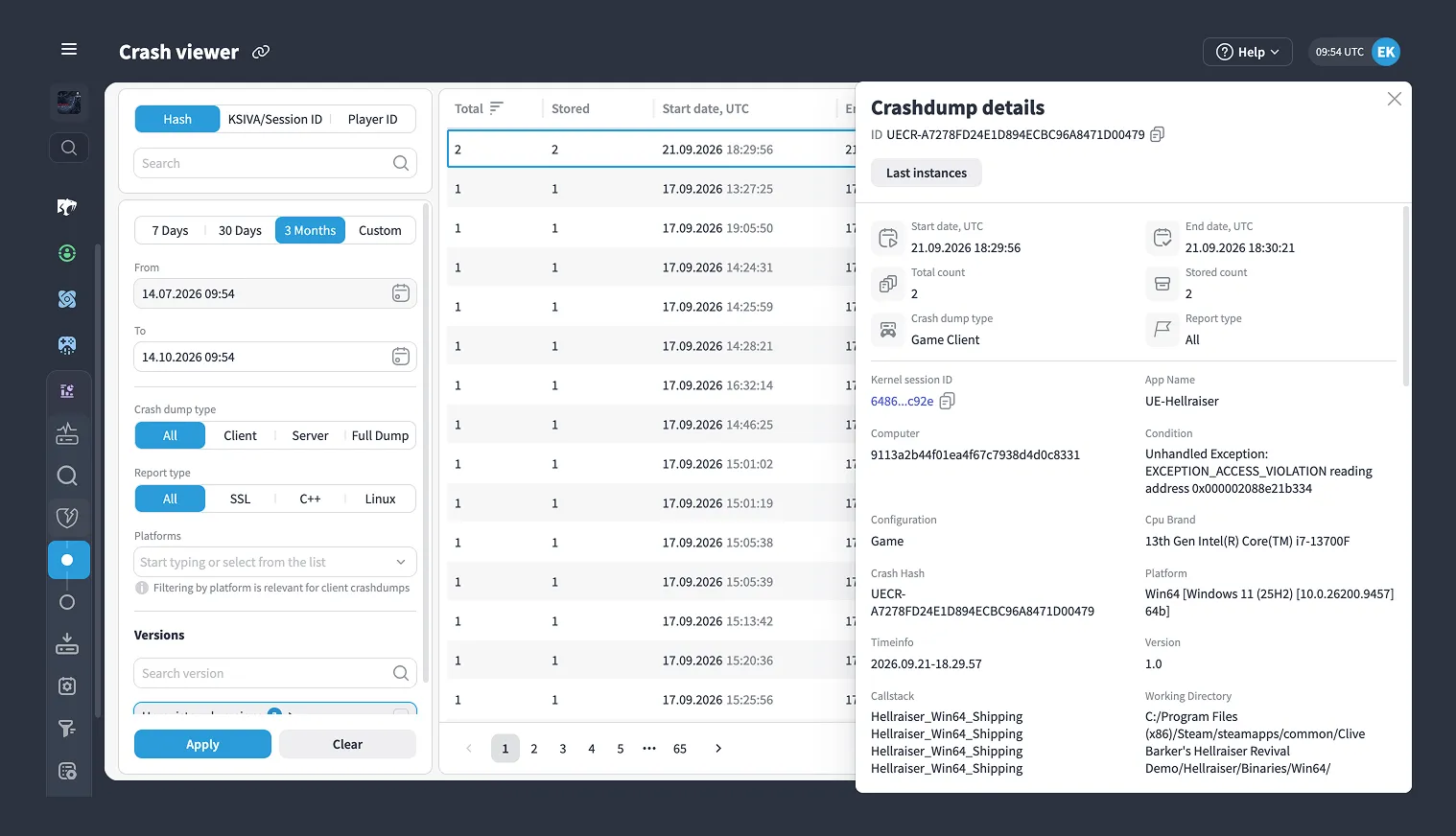
Centralizing these reports supports both investigation and coordination. Developers can work from a common source of information when reviewing failures, deciding where additional testing is needed, and checking whether an issue continues to appear.
The team remains responsible for interpreting the data, reproducing problems where possible, and validating fixes. Hydra provides the reporting tools that support this work.
Results: Game Services Beyond Multiplayer
Hellraiser: Revival shows how a single-player title can benefit from a shared services platform. From pre-release playtests and crash reporting to in-game promotions, account linking, and rewards, Hydra supports both player-facing features and the team’s development and release workflows.
These services address practical needs across development, LiveOps, and marketing. The project illustrates Hydra’s modular approach: teams can choose the capabilities their game needs and build on a shared foundation.
